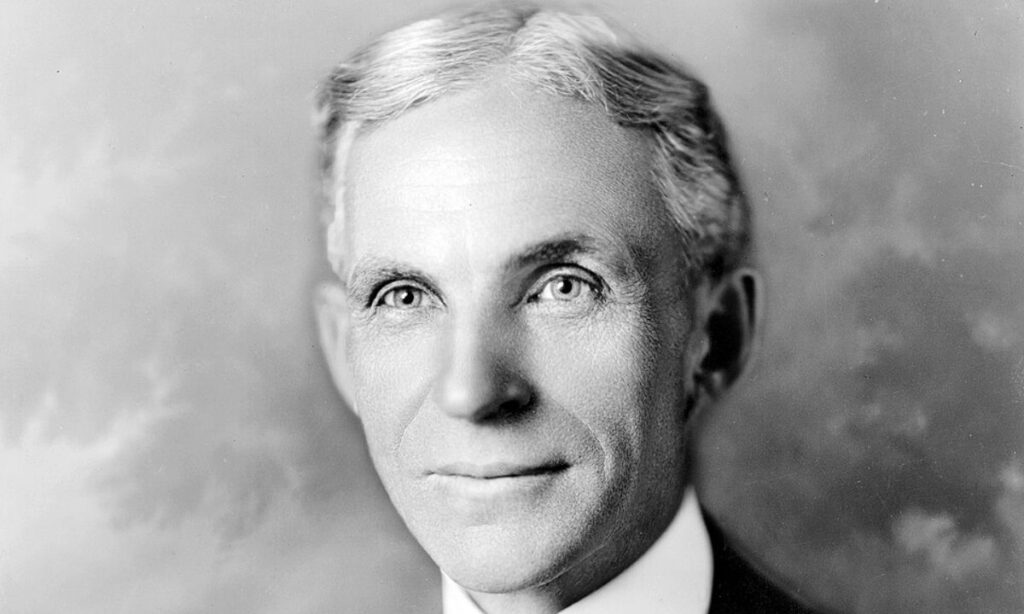
When discussing the greatest industrial fortunes in American history, few names carry as much weight as Henry Ford. Best known for revolutionizing automobile manufacturing, Ford didn’t just build cars—he built an economic empire that reshaped modern industry. Today, experts often revisit Henry Ford net worth adjusted for inflation, with many estimates placing his wealth at an astonishing $200 billion in today’s dollars. That figure positions him among the richest individuals ever, rivaling modern billionaires like Elon Musk and Jeff Bezos.
But how did Ford accumulate such immense wealth? And what factors contributed to his financial legacy? This article dives deep into Ford’s biography, early life, business breakthroughs, and controversies. You’ll also learn how his company transformed global manufacturing, how his labor policies changed the workforce, and how his personal life influenced his empire.
Whether you’re researching American business history or simply curious about Henry Ford net worth, this comprehensive guide provides verified facts, historical context, and expert insights. By the end, you’ll understand not just how wealthy Ford was—but why his influence still shapes the modern economy.
Henry Ford Bio
| Field | Details |
| Full Name | Henry Ford |
| Age (2026) | Would be 162 years old |
| Birthplace | Dearborn, Michigan, USA |
| Nationality | American |
| Profession | Industrialist, Business Magnate |
| Height | Approx. 5 ft 9 in (175 cm) |
| Weight | Approx. 154 lbs (70 kg) |
| Net Worth | ~$200 Billion (inflation-adjusted estimate) |
What Was Henry Ford’s Net Worth?
Understanding Henry Ford net worth adjusted for inflation requires context. During his lifetime, Ford’s wealth was estimated at around $1–2 billion—a staggering figure in the early 20th century. When adjusted to modern dollars, economists and historians often estimate his fortune at approximately $200 billion. According to financial historians, this places him among the wealthiest figures in history.
Ford’s wealth came primarily from his ownership stake in Ford Motor Company. Unlike many modern CEOs, Ford retained tight control over his company, ensuring that a significant portion of profits flowed directly to him. Additionally, his innovative manufacturing processes dramatically lowered costs, increasing margins and accelerating growth.
However, Ford’s wealth wasn’t just about numbers. His influence extended beyond income and earnings. He helped create the American middle class by introducing the $5 workday, which allowed workers to afford the very cars they produced. This strategy boosted demand while stabilizing his workforce—an economic model still studied in business schools today.
Early Life
Henry Ford was born on July 30, 1863, in Dearborn, Michigan. Raised on a farm, he developed an early fascination with machinery rather than agriculture. As a child, Ford often dismantled and reassembled watches, showcasing his natural engineering curiosity.
At age 16, Ford left home to work as an apprentice machinist in Detroit. This move marked a turning point. Instead of following a traditional farming path, he pursued mechanical innovation. According to historical records, these early experiences laid the foundation for his later breakthroughs in industrial engineering.
Despite limited formal education, Ford’s hands-on learning proved invaluable. He later worked for Edison Illuminating Company, where he gained exposure to emerging technologies. His promotion to chief engineer provided both financial stability and time to experiment with gasoline-powered engines—an interest that would soon transform his career.
Career Beginnings
Ford’s early career was marked by experimentation and failure. In 1896, he built his first gasoline-powered vehicle, the Quadricycle. While primitive, it demonstrated his ability to innovate independently. However, his first business ventures—the Detroit Automobile Company and Henry Ford Company—failed due to high costs and low efficiency.
These setbacks were crucial learning experiences. Ford realized that mass production—not luxury craftsmanship—was the key to success. He shifted his focus toward affordability and efficiency, setting the stage for future breakthroughs.
By 1903, Ford co-founded Ford Motor Company. This marked the true beginning of his financial rise. Within five years, the company introduced the Model T, a vehicle designed for everyday Americans. Its success would redefine transportation and dramatically increase Ford’s earnings, income, and long-term net worth.
Ford Motor Company
The success of Ford Motor Company is central to understanding Henry Ford net worth. Founded in 1903, the company revolutionized manufacturing with the introduction of the moving assembly line in 1913. This innovation reduced production time for a single car from over 12 hours to just 90 minutes.
The Model T became the cornerstone of Ford’s empire. By 1927, over 15 million units had been sold, making it one of the most influential vehicles in history. This mass adoption generated enormous profits and established Ford as a dominant force in the global automobile industry.
Ford’s strategy focused on vertical integration. He controlled raw materials, production, and distribution. This approach minimized costs and maximized profits. As a result, Ford’s financial growth accelerated rapidly, contributing to his massive inflation-adjusted net worth.
Employee Labor
Ford’s labor policies were groundbreaking—and controversial. In 1914, he introduced the $5 workday, doubling the average factory wage. This move shocked industrialists but had a clear purpose: reduce employee turnover and increase productivity.
The policy worked. Workers flocked to Ford factories, creating a stable and efficient workforce. Additionally, higher wages enabled employees to purchase Model T cars, reinforcing demand. This cycle of production and consumption significantly boosted Ford’s income and long-term wealth.
However, Ford’s labor practices weren’t without criticism. He resisted unionization and maintained strict control over workers’ personal lives through the Sociological Department. Despite these controversies, his labor innovations remain a key factor in his economic legacy and overall net worth.
Also Read This Celebrity : Michelle Smallmon Wikipedia, Wiki, Age, Height, Spouse, Salary, Married, Partner, Single
Ford Airplane Company
During World War I, Ford expanded into aviation with the Ford Airplane Company. Although less successful than his automotive ventures, it demonstrated his willingness to diversify. The company produced aircraft engines and later developed the Ford Trimotor, one of the first reliable commercial airplanes.
The Trimotor played a role in early passenger aviation, helping establish air travel as a viable industry. While the division never matched the profitability of Ford’s automotive business, it contributed to his reputation as a forward-thinking industrialist.
Ultimately, Ford exited the aviation sector in the 1930s. However, the venture reflected his broader vision of transportation innovation. It also highlighted his ability to invest in emerging industries—an approach that contributed indirectly to his wealth and influence.
Anti-Semitism
Ford’s legacy includes a deeply troubling chapter. In the 1920s, he published anti-Semitic content through his newspaper, The Dearborn Independent. These writings, later compiled into “The International Jew,” spread harmful conspiracy theories.
This aspect of Ford’s life has been widely condemned by historians and organizations, including the Anti-Defamation League. His actions damaged his reputation and remain a significant part of his historical evaluation.
Ford eventually issued a public apology in 1927, though questions remain about its sincerity. While this controversy does not directly affect Henry Ford net worth, it plays a critical role in understanding his character and legacy.
Wife and Son
Henry Ford married Clara Ford in 1888. Their marriage lasted nearly six decades and was marked by stability and mutual support. Clara played a quiet but important role in Ford’s life, often grounding his ambitions.
The couple had one son, Edsel Ford, who later became president of Ford Motor Company. Edsel was instrumental in modernizing the company and introducing new designs. However, his leadership was often overshadowed by his father’s dominance.
Family dynamics influenced Ford’s business decisions. His reluctance to relinquish control created tensions within the company. Despite this, the Ford family remained central to the brand’s identity and long-term success.
Later Years and Death
In his later years, Ford gradually stepped back from daily operations, though he remained influential. Following Edsel’s death in 1943, Ford briefly resumed control of the company before passing leadership to his grandson, Henry Ford II.
Ford died on April 7, 1947, at the age of 83. At the time of his death, he had amassed one of the largest fortunes in American history. His estate, business holdings, and innovations ensured that his financial legacy would endure for generations.
Today, Ford’s influence extends far beyond his net worth. His contributions to manufacturing, labor practices, and transportation continue to shape global industries. His story remains a cornerstone of American economic history.
Frequently Asked Questions
1. What was Henry Ford net worth adjusted for inflation?
Estimates suggest around $200 billion, making him one of the richest individuals ever.
2. How did Henry Ford make his money?
Primarily through Ford Motor Company and mass automobile production.
3. Did Henry Ford invent the car?
No, but he revolutionized manufacturing with the assembly line.
4. What was Henry Ford’s salary?
He earned profits through ownership rather than a traditional salary.
5. Is Ford Motor Company still owned by the Ford family?
Yes, the Ford family retains significant voting control.
Conclusion
The story of Henry Ford net worth adjusted for inflation is more than a tale of immense wealth—it’s a blueprint for industrial transformation. With an estimated fortune of $200 billion in today’s dollars, Ford stands among history’s financial giants. However, his legacy goes beyond earnings, income, and net worth.
Ford reshaped manufacturing through innovation, made automobiles accessible to the average American, and influenced labor practices across industries. At the same time, his life included controversies that continue to spark debate. This dual legacy makes him one of the most complex figures in business history.
For modern readers, Ford’s journey offers valuable lessons in entrepreneurship, scalability, and economic impact. His empire wasn’t built overnight—it was the result of persistence, innovation, and bold decision-making. Even today, his influence can be seen in every assembly line, every mass-produced product, and every discussion about wealth creation.
In the end, Henry Ford didn’t just accumulate wealth—he changed the world.

Hi, I’m Ricardo Jones passionate about sharing heartfelt blessings that inspire, uplift, and bring peace to everyday life. Through my writing, I aim to spread positivity and meaningful words that connect deeply with readers. Blessings are more than words; they’re a gift of hope and joy.